Hydraulic Seals
Hydraulic seals are a device that restricts the escape of fluid and foreign materials from entering in a hydraulic application such as a cylinder. When it comes to hydraulic seals, they are designed for high-pressure dynamic applications like hydraulic cylinders. Throughout different types of machinery, hydraulic seals are an essential piece to it functioning properly. Hydraulic seals can also be used for rotary and reciprocating motions.
Common Hydraulic Seals
Hydraulic Seals for Demanding Applications
Reliable sealing solutions. Materials to match your needs.
From rod seals and piston seals to O-rings, wipers, wear rings, and specialist sealing components, we offer hydraulic sealing solutions in a wide range of materials, profiles, and configurations. Whether you need standard seals or a solution for a specific application, find the components designed to help maintain pressure, prevent leakage, and keep your equipment performing reliably.
Looking for a specific hydraulic seal? Explore our range of seal types and materials, or contact our team for help identifying the right solution for your application.

Custom Hydraulic Seals Made for Your Needs
Can't find the seal you need? EPM offers custom hydraulic sealing solutions for hard-to-find, obsolete, and application-specific parts. Send us your dimensions, drawing, or sample to get started.
Request a Custom Seal
EPM supplies hydraulic seals for hydraulic cylinders, pumps, valves,
and industrial equipment, including rod seals, piston seals, O-rings,
wipers, wear rings, U-cups, buffer seals, and rotary shaft seals.
Available in a range of profiles, sizes, and materials, our sealing
solutions help prevent fluid leakage, maintain pressure, and support
reliable equipment performance.
From standard replacement seals to custom solutions for hard-to-find
or obsolete components, EPM helps customers identify suitable sealing
options for their specific requirements. Whether you have a part number,
drawing, dimensions, or an existing seal sample, we can help you explore
the next steps.
Different sealing profiles perform specific functions depending on
equipment design, pressure, movement, and operating conditions.
EPM's hydraulic seal range includes:
Need a specific profile or a replacement for an existing component?
EPM can help you identify the relevant seal type and requirements.
Hydraulic seals are designed for different pressure directions and
movement requirements. Single-acting seals are designed to seal
pressure acting primarily from one axial direction, while double-acting
seals are designed to seal pressure from either direction in compatible
applications involving reciprocating movement.
The right configuration depends on the cylinder design, seal profile,
pressure conditions, and intended application.
EPM's hydraulic sealing solutions can involve a variety of elastomers,
thermoplastics, and engineered compounds. Material selection depends
on hydraulic fluid compatibility, operating temperature, pressure,
friction, wear resistance, and the demands of the application.
EPM can help you assess suitable material options for your application.
The correct compound must be compatible with the operating fluid,
temperature, pressure, and environmental conditions.
Explore EPM Technical Resources
Not every application can be served by a standard seal. Custom hydraulic
seals may be required when a component is obsolete, difficult to source,
dimensionally unusual, or designed for specific operating conditions.
EPM can help customers explore sealing solutions based on existing part
numbers, measurements, technical drawings, samples, and application
details. Providing accurate specifications helps establish the
requirements for identifying or developing a suitable seal.
Choosing the correct hydraulic seal involves more than matching its
diameter. Consider the following requirements:
If you're unsure which specifications matter for your application,
EPM can help you identify the information needed to evaluate your
sealing requirements.
Whether you need a standard replacement, help identifying an existing
seal, or a custom solution for a challenging application, EPM can help
you explore the available options. Send us your part number, dimensions,
drawing, or sample details to get started.
Hydraulic Seals & Custom Sealing Solutions
Hydraulic Seal Types
Single-Acting and Double-Acting Hydraulic Seals
Hydraulic Seal Materials
Standard and Custom Hydraulic Seals
How to Choose the Right Hydraulic Seal
Find Your Hydraulic Seal with EPM
Rod Seals
Rod Seals are the most critical seals in a hydraulic cylinder. Rod Seals are radial internal seals. Rod Seals are press-fit into a housing bore with the sealing lip contacting the shaft. Rod Seals are also referred to as shaft seals sometimes. Rod Seal failure could result in fluid leakage. Special care should be shown in selecting the best Rod Seal for your sealing application. Rod Seals act as a dynamic seal along its inner diameter and static along its outer diameter. Rod Seals are affected by changes to the rod surface and fluid temperatures. Rod Seals often see the highest pressure variation. Rod Seals are often the decisive factor in the function of a hydraulic cylinder.

DS101
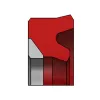
DS102
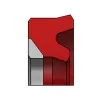
DS102R
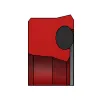
DS103
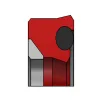
DS104

DS104R

DS105

DS106

DS107

DS108

DS109

DS110-112

DS116

DS117

DS117R

DS118

DS119

DS120

DS124

DS125

DS126-128

DS129

DS131

DS138

DS139

DS141

DS142

DS199

DS205

DS238
Piston Seals
Piston Seals are radial seals. Piston Seals are external seals. Piston Seals fit onto shafts with the sealing lip contacting the housing bore. Piston seals may also be known as Piston Packing. Piston Seals are mounted on a piston head which moves thru the bore of a hydraulic cylinder. Piston Seals can either be single acting or double acting seals. Piston Seals are usually used in conjunction with bearings and guide rings. Piston Seals are typically made of polyurethane but some piston seals can be made of fabric reinforced rubber.
DK101

DK102

DK102R

DK103

DK104

DK104R

DK105

DK106

DK107

DK108

DK109

DK109D

DK109H

DK109N

DK110-112

DK116

DK117

DK118

DK119

DK120

DK122

DK123
Wipers
A wiper, also known as a rod wiper, dust seal, excluder or scraper, is a ring in a cylinder that is used to wipe or scrape dirt from the rod or shaft. A wiper helps prevent dirt particles from entering the hydraulic system. A rod wipers main function is to keep the rod and cylinder clean and free from foreign matter preventing premature failure. The wiper is not a pressure sealing element. Wipers most commonly snap into a groove. Some other wipers are made to press into a groove, such as a metal clad wiper. A wiper seal can be made and can function as a wiper and a rod seal all in one groove where space is an issue.

DA101

DA102

DA103

DA104

DA105

DA106

DA107

DA108

DA111

DA113

DA114

DA115

DA116

DA117

DA118

DA119

DA212

DA213
Guide and Wear Rings
Wear Rings are guiding elements that snap onto a shaft, both piston and rod, to keep metal from contacting metal that will damage and score the surface of a cylinder. Wear Rings help keep the cylinder from seizing up. Wear Rings are also know as wear bands, guide rings, wear guide rings, or bearings. Wear Rings have a durable wear rate and non-scoring properties. Wear Rings are made in inch and metric sizes. Wear rings are usually made of fine weave cotton fabric and phenolic resin. Wear Rings absorb transverse loads on the rod and improve the durability of packings in a hydraulic cylinder.

DF101

DF102

DF103

DF104

DF105

DF106

DF107

DF108

DFB102
Back-up Rings
Back-up Rings are used in conjunction with O-Rings for both static and dynamic sealing applications. Back-up rings prevent extrusion of the o-ring when it is subjected to high pressures. Back-up rings help when the extrusion gaps are excessive. Two back-up rings should be used, one on each side of the o-ring, wherever possible. Back-up rings are washer like devices. Back-up rings are not seals themselves. Back-up rings are a support item like a spacer. Back-up rings are available in two designs, a flat washer style and a contoured style. Back-up rings may also be called buffer rings.

DST108

DST109

DST110

DST111

DST112

DST113
O-rings
O-rings are a one piece object usually molded from elastomeric material. O-rings are in the shape of a torus (donut shape). O-rings can form a static or dynamic seal. A static o-ring seal is used for containing a pressure or maintaining a vacuum. Dynamic o-ring seals can be reciprocating or rotating. An o-ring, when installed, compresses and deforms slightly into the free space within the groove to form a proper seal. O-rings are capable of sealing thousands of PSI pressure. O-rings are one of the most common seals used in machine design. O-rings are one of the most inexpensive seals and easy to make. O-rings are reliable and have simple mounting requirements. And o-ring is measured by its inner and outer diameters. O-rings are described by material composition and hardness. O-rings are typically available in standard sizes per industry standards. O-rings are available in both metric and inch sizes. O-ring selection is based on chemical compatibility, application temperature, sealing pressure, lubrication requirements, quality, quantity and cost. O-rings can also be machined with a CNC lathe.

DFL106